
Guide
The Confit Yolk: A Restaurant Secret Worth Stealing
At 65°C (149F), a single egg yolk becomes something between silk and velvet - and it takes less effort than you think.
Portions
Units
Temperature
Ingredients
- 4xLarge free-range egg yolks
- 250GramsLight olive oil or grapeseed oil
- 2xFresh thyme sprigs
- 1xGarlic clove
Lightly crushed
- 1xLemon zest strip (optional)
- 1PinchFlaky sea salt
Steps
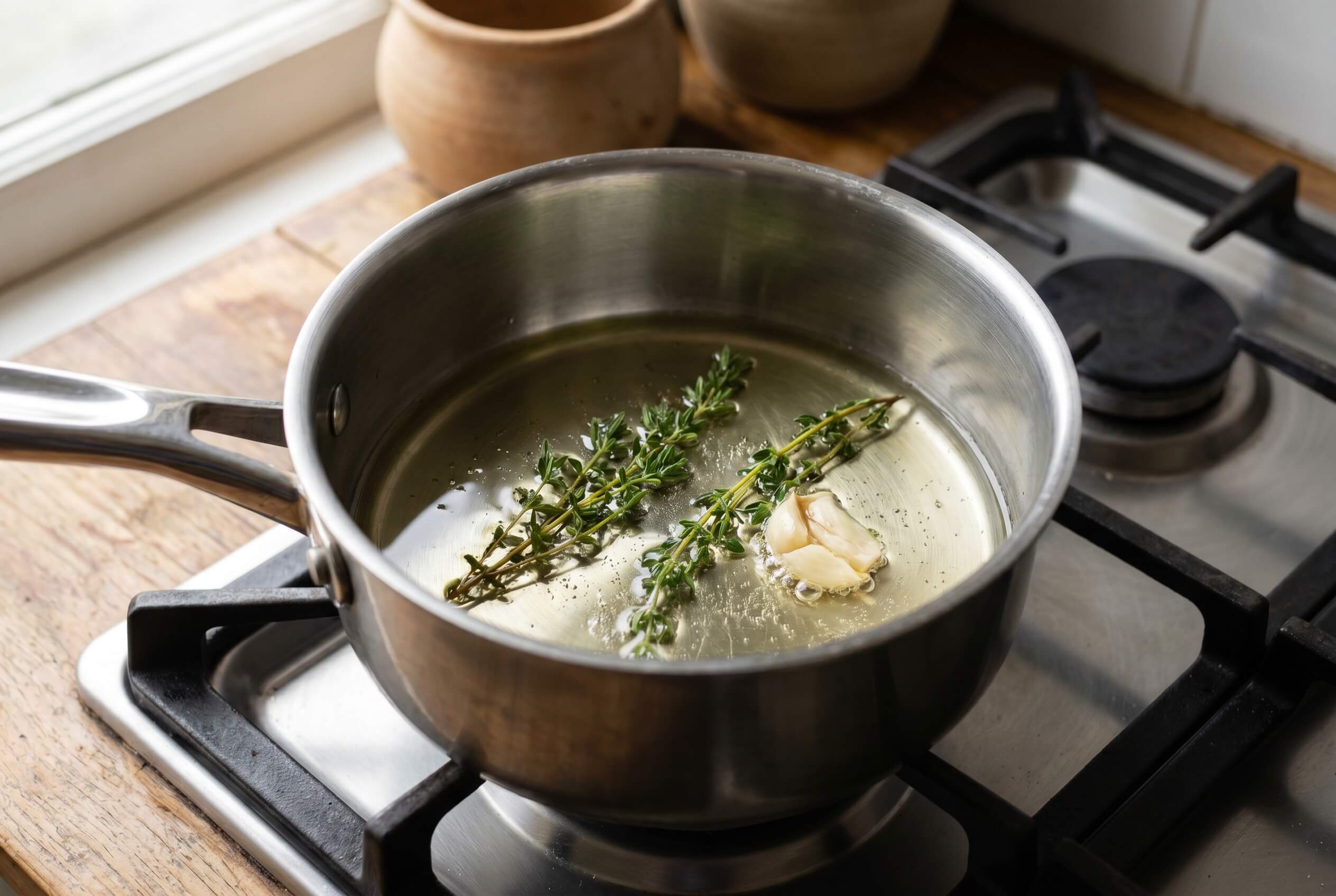
Combine the oil, thyme, garlic, and lemon zest in a small, heavy-based saucepan. Warm over the lowest heat your stove allows until the oil reaches 70°C, verified with a probe thermometer clipped to the side of the pan. Allow 5 minutes for the temperature to fully equilibrate before proceeding.
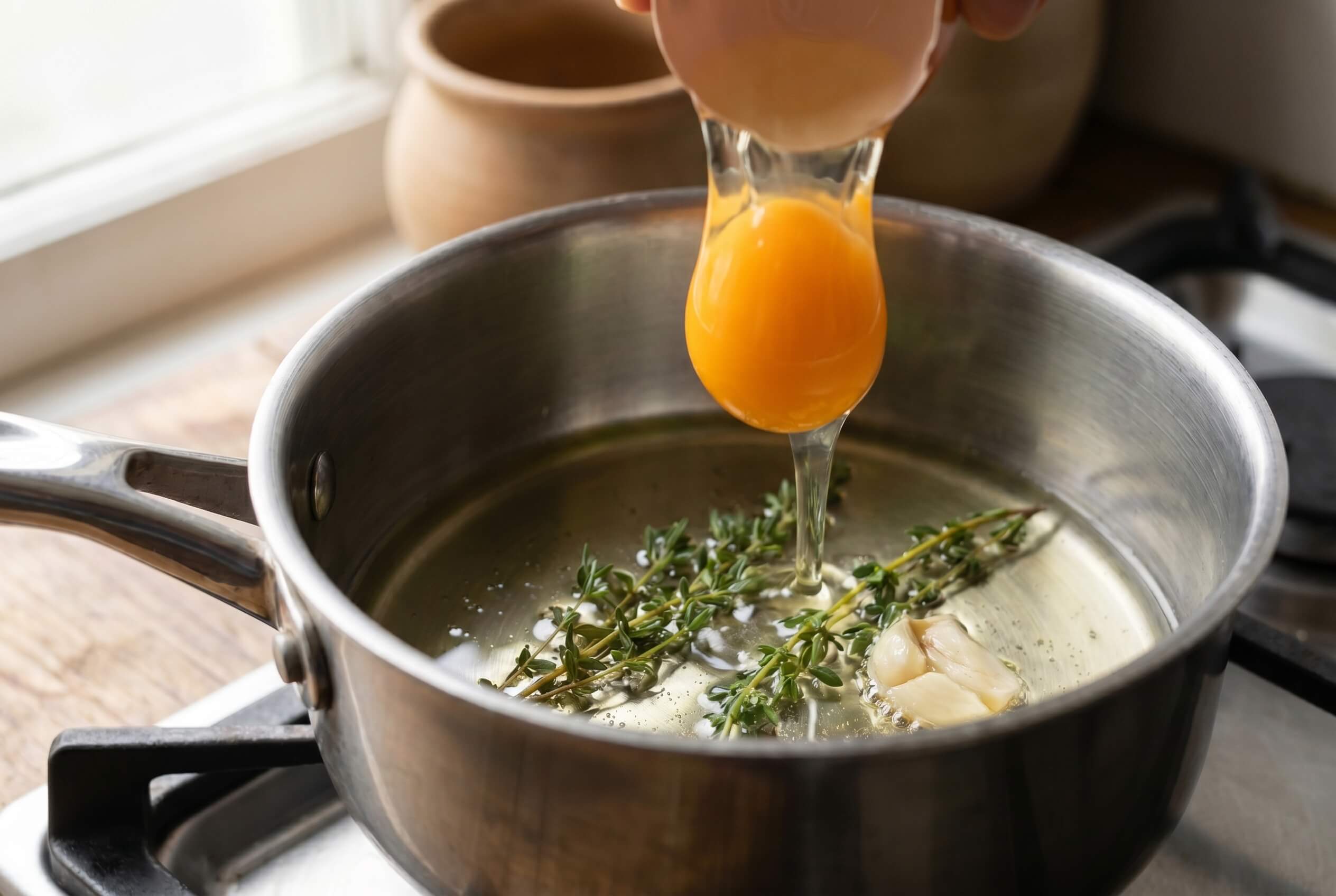
Separate each egg, using half the shell as a cradle to catch the yolk and let the white drain away. Lower each yolk into the warm oil one at a time, using the shell as a delivery vessel. The yolks should settle gently onto the base of the pan without touching one another.
Hold the temperature steadily at 70°C for 40 to 45 minutes. Do not stir. Do not cover. If the temperature climbs, lift the pan off the heat for 20-30 seconds and return it. Fluctuations of 1-2°C are acceptable; anything beyond requires immediate correction.
At the 40-minute mark, test one yolk by nudging it gently with a small offset spatula. It should hold its shape and offer slight resistance without feeling rigid. If it still feels fragile and liquid at the centre, continue for another 5 minutes.
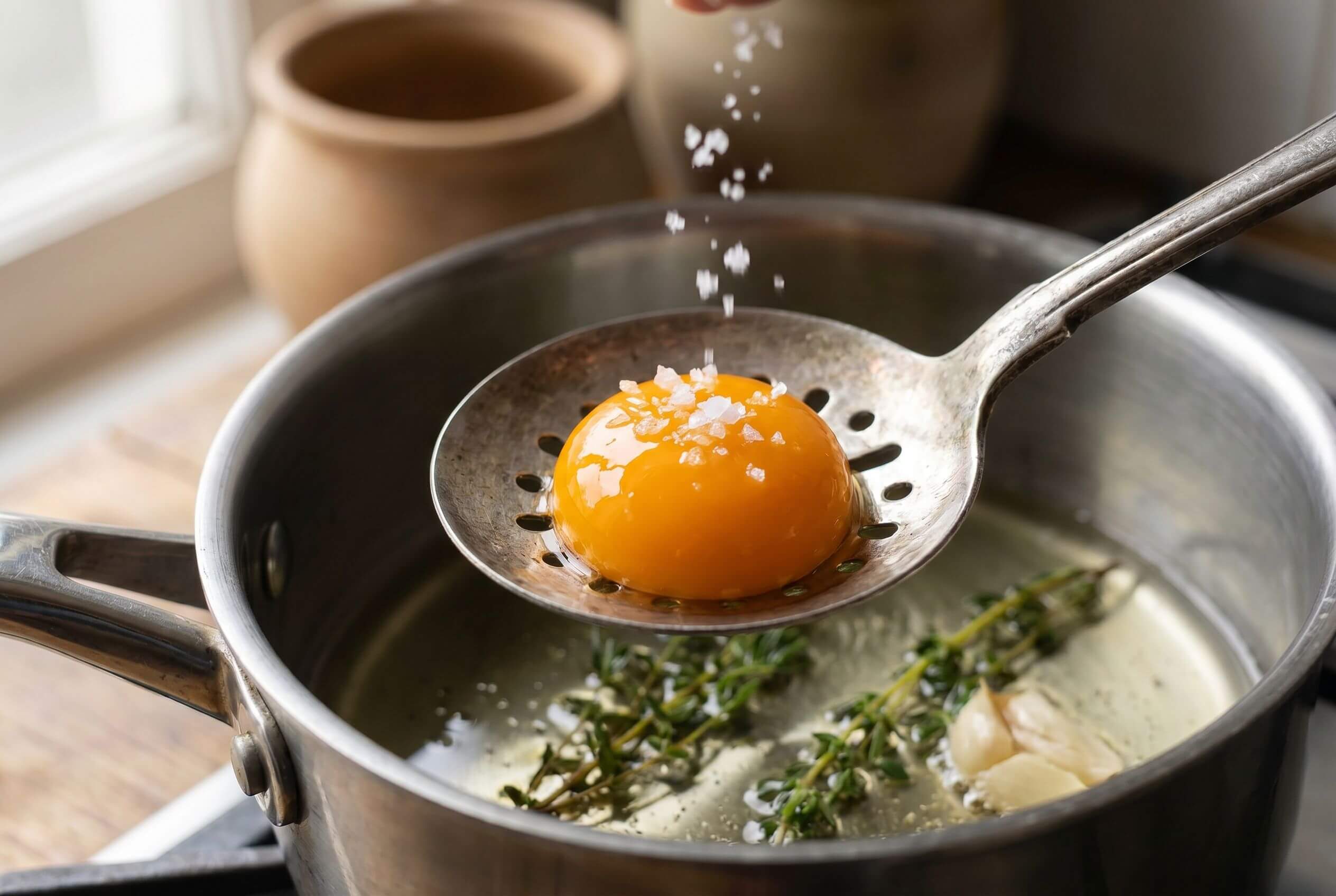
Lift each yolk from the oil using a slotted spoon. Drain briefly on kitchen paper, then transfer immediately onto your plated dish. Season with a pinch of flaky sea salt directly over the surface and serve within one minute.
To make ahead: once cooked, remove the pan from the heat and allow the yolks to cool slowly in the oil. Refrigerate - still fully submerged - for up to 4 hours. To reheat, return the oil and yolks together to 60°C for 10 minutes. This is enough to bring them back to temperature without pushing them into overcooking.
At most Michelin-starred restaurants, the egg yolk on your plate has not been cooked the way you might imagine. It hasn't been poached, coddled, or soft-boiled. It has been confited - submerged in warm oil at a temperature so precisely controlled that the proteins inside gel at a fundamentally different rate than any heat application you know from a home kitchen.
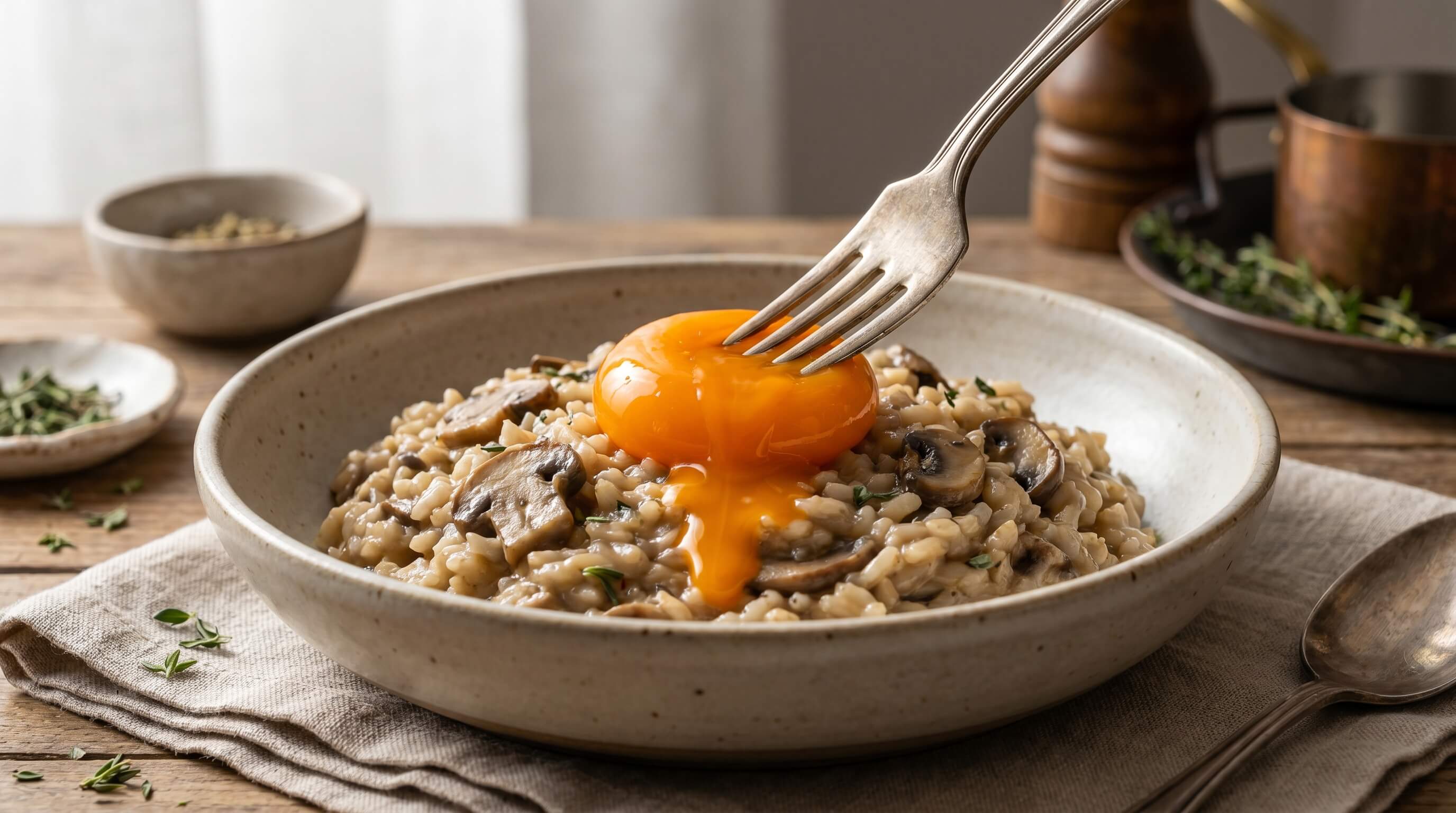
The result is a yolk that holds its shape like a custard, cuts like butter, and bleeds a slow, orange tide across whatever it touches. It is not runny. It is not cooked through. It occupies a third state entirely.
The Science Behind the Set
Egg yolk proteins begin to denature around 63°C (145°F) and are essentially fully set by 70°C (158°F). The window between those two temperatures is where confit yolks live. At 65°C, the globular proteins coagulate just enough to give the yolk structural integrity - it will hold its shape when lifted - while the lipid-rich interior retains a flowing, jammy consistency that no higher-heat method can replicate.
Cooking in oil rather than water matters, too. Oil distributes heat more uniformly than air, which makes dry-oven methods slightly less reliable. Its higher viscosity means the yolk floats in a stable thermal bath with no agitation, no bubbling, no evaporative cooling. Just even, patient warmth.
Where This Technique Comes From
The method entered wider restaurant consciousness through modernist Spanish and French kitchens in the early 2000s. Ferran Adrià and his collaborators at elBulli codified low-temperature egg cookery into a formal discipline, though the principle had older roots: the Japanese onsen tamago - traditionally cooked in geothermal spring water at approximately 65–70°C - is its spiritual ancestor. What modernist chefs added was the fat medium, the precision of a controlled apparatus, and the deliberate use of the yolk as a plated jewel rather than a component to be hidden.
Today, confit yolks appear as finishing elements on carbonara, mushroom risotto, roasted asparagus with bottarga, and slow-braised short rib. Their appeal is partly elegance, partly utility: they can be prepared hours in advance, refrigerated in their oil, and gently rewarmed before service without losing a thing.
What You Actually Need
A sous vide immersion circulator is the cleanest tool, but it is not mandatory. A small saucepan, a probe thermometer, and careful attention over forty-five minutes will do the work. The key is holding the oil within a two-degree window. Drift above 68°C and the yolk begins to lose its silkiness; push past 72°C and you have, in essence, a very small, oily hard-boiled yolk - technically edible, spiritually a failure.
The oil itself can be a light olive oil for richness and flavour, or a neutral grapeseed or sunflower oil if you want the yolk to be the only statement on the plate. Aromatics - a sprig of thyme, a lightly crushed garlic clove, a strip of lemon zest - infuse gently but noticeably. Use them deliberately, not decoratively.