
Health
The 91 Percent Advantage: What Heat Does to Egg Protein That Raw Consumption Never Can
A single 1998 study quietly dismantled decades of gym-floor wisdom - and the implications reach well beyond the protein shake
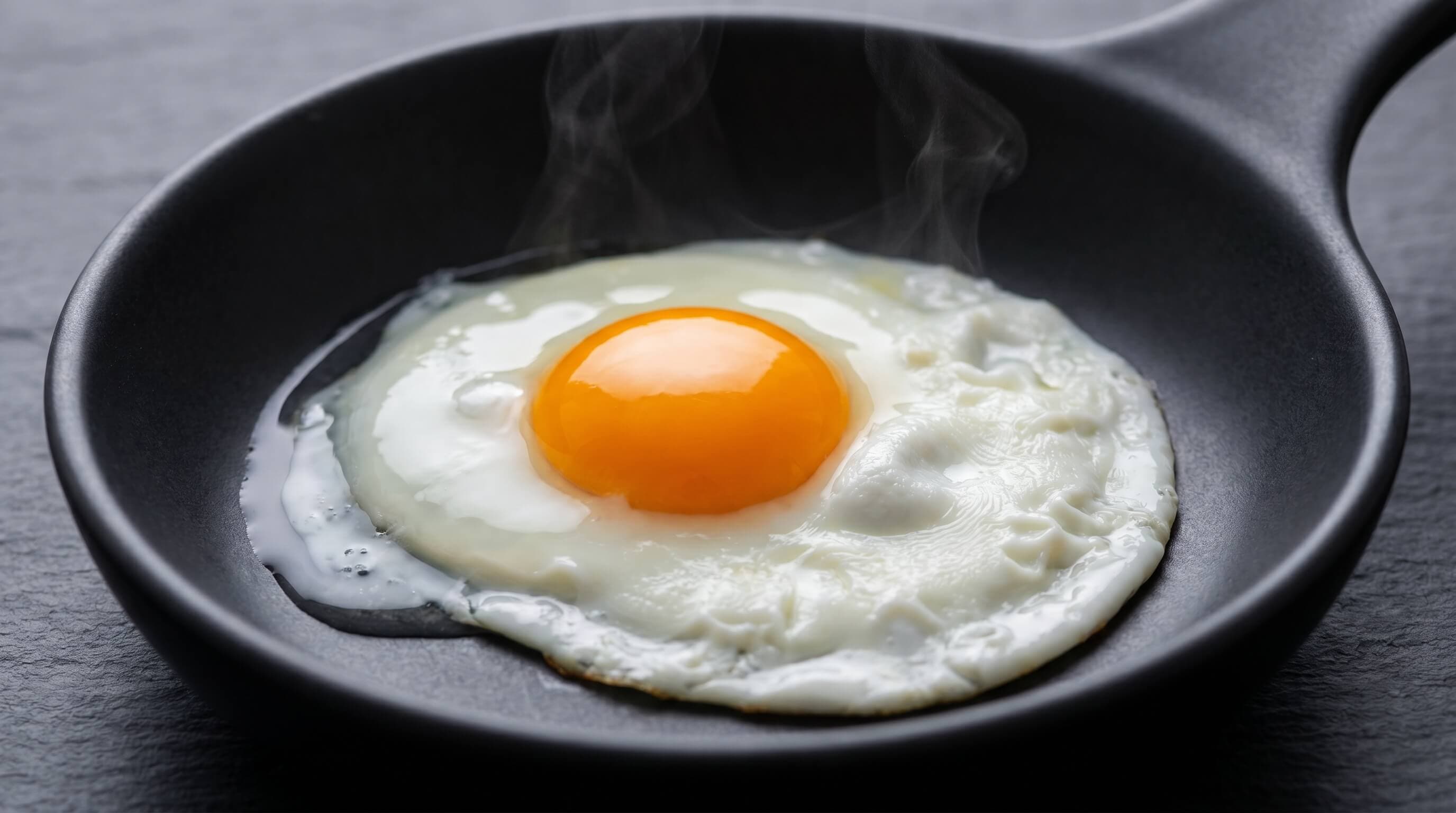
The image is fixed in popular culture: a glass of raw eggs downed before training, a shortcut to the protein that serious athletes supposedly require. It is an idea that persists in fitness circles with remarkable stubbornness, and it is, by the evidence, almost entirely wrong. Cooking an egg does not compromise its protein. It dramatically improves it.
The numbers are striking enough to warrant repeating. In a 1998 study by Pieter Evenepoel and colleagues at the University of Leuven, subjects consumed either raw or cooked eggs labeled with a nitrogen tracer, allowing researchers to track exactly how much protein was actually absorbed. Cooked eggs yielded a protein digestibility rate of approximately 91 percent. Raw eggs came in at 51 percent. Nearly half the protein in a raw egg passes through the digestive system largely unabsorbed.
Why Structure Is the Problem
Egg white protein in its raw state is tightly folded into complex three-dimensional structures. Ovalbumin, ovotransferrin, and ovomucoid - the three dominant proteins in albumen - exist in their native conformations, compact and resistant to the proteolytic enzymes that the digestive system deploys to break protein into absorbable amino acids. The enzymes require access to peptide bonds along the protein chain, and in a tightly coiled native structure, many of those bonds are simply buried and inaccessible.
Heat changes this entirely. When egg white reaches approximately 60°C, the thermal energy disrupts the hydrogen bonds and hydrophobic interactions holding these proteins in their native shape. They unfold - a process called denaturation - exposing the peptide backbone in an extended, accessible form. Digestive enzymes can now cleave the chain efficiently. The protein's amino acid content has not changed. Its availability to the body has transformed.
This is not protein destruction. It is protein preparation. The cooked egg white that slides from a pan is, in a very precise biochemical sense, pre-processed for digestion in a way the raw white is not.
The Avidin Problem
Raw egg consumption carries a second, less-discussed liability unrelated to protein digestibility: avidin. This glycoprotein, found only in the white, binds with extraordinary affinity to biotin - vitamin B7 - forming a complex so stable that it resists digestion entirely. Consumed raw, avidin does not merely fail to deliver biotin; it actively scavenges the biotin already present in food and the gut, creating a functional deficiency.
Biotin is essential for fatty acid synthesis, gluconeogenesis, and the metabolism of branched-chain amino acids. Chronic raw egg consumption - the kind sustained over months - has produced documented cases of biotin deficiency in medical literature, presenting as hair loss, dermatitis, and neurological symptoms. The condition even has a name: egg white injury, first described in the 1920s when researchers fed rats exclusively raw egg whites and observed systematic deterioration.
Heat denatures avidin completely. A cooked egg white contains no functional avidin. The biotin in the yolk - eggs are one of the better dietary sources of the vitamin, at approximately 10 micrograms per large egg - becomes fully available rather than partially sequestered.
The Biological Value Question
Protein quality is assessed through several overlapping metrics, and the whole egg performs near the top of every one of them. The Biological Value (BV) scale, which measures the proportion of absorbed nitrogen retained for body protein synthesis, assigns the whole egg a score of 100 - a benchmark used as the reference standard against which other proteins are compared. Whey protein scores around 104 (slightly above, using updated methods), casein around 77, soy protein around 74, wheat gluten around 64.
The more modern Protein Digestibility Corrected Amino Acid Score (PDCAAS), which adjusts for amino acid completeness and digestibility simultaneously, also places egg protein at the maximum value of 1.0. This means eggs provide all nine essential amino acids in proportions closely matching human requirements, and in a cooked form, deliver them at a digestibility rate that approaches the theoretical ceiling.
What makes egg protein particularly useful for muscle protein synthesis is its leucine content. Leucine is the branched-chain amino acid that functions as the primary trigger for mTOR activation - the signaling pathway that initiates muscle protein synthesis at the cellular level. A large whole egg contains approximately 0.54 grams of leucine. The threshold required to maximally stimulate mTOR in a single meal is estimated at around 2 to 3 grams, meaning three to four whole eggs at a sitting provides a meaningful anabolic signal without supplementation.
Whole Egg Versus White: A Significant Practical Distinction
The egg-white omelet, a fixture of low-fat dietary culture since the 1980s, represents a nutritional trade-off that deserves more scrutiny than it typically receives. A 2017 study published in the American Journal of Clinical Nutrition by researchers at the University of Illinois directly compared whole egg consumption to egg white consumption following resistance exercise. Subjects who consumed whole eggs showed 40 percent greater muscle protein synthesis rates than those who consumed an equivalent amount of protein from egg whites alone.
The researchers attributed this to the complex matrix of nutrients in the yolk - not just leucine, but fat-soluble vitamins, phospholipids, and micronutrients that appear to modulate the anabolic response through mechanisms not yet fully characterized. The yolk does not merely add calories to the equation. It appears to change the equation itself.
This finding has meaningful implications for anyone who has spent years separating eggs in the name of leanness. The yolk is not a dietary compromise appended to the useful part of the egg. It is, from a muscle protein synthesis standpoint, the part that makes the white worth eating.
How Cooking Method Affects the Outcome
If heat improves digestibility, it is reasonable to ask whether more heat improves it further. The answer is no - and at a certain point, the relationship inverts. The 91 percent digestibility figure applies to moderately cooked eggs: scrambled, poached, soft-boiled, or fried at moderate temperatures. At very high heat, sustained for extended periods, the Maillard reaction between amino acids and reducing sugars can generate compounds that are partially resistant to enzymatic digestion. Overcooked, rubbery egg whites represent a modest step backward in bioavailability relative to gently cooked ones.
The practical implication is that the ideal preparation for protein absorption sits in the middle of the heat spectrum: eggs cooked through but not aggressively browned, with whites fully set and yolks either soft or fully cooked depending on preference. A soft scramble finished off the heat at 70°C delivers structurally denatured protein without the amino acid modification that high-temperature browning introduces.
This is one of those rare cases where the preparation that tastes best - yielding, tender, gently cooked - also happens to be the preparation most aligned with what the body can actually use.
The Protein Source in Context
Whole eggs at roughly 6 grams of complete protein per large egg, costing a fraction of most animal protein sources, with a digestibility rate approaching 91 percent and a micronutrient profile that includes choline, selenium, vitamins B2 and B12, and meaningful quantities of vitamin D - represent a nutritional density that is difficult to replicate gram for gram at comparable cost.
The conversation around egg protein tends to get distorted by either excessive enthusiasm or residual cholesterol anxiety. Neither serves the practical question well. The evidence, accumulated over several decades of increasingly refined nutritional science, points toward a simple conclusion: two or three whole eggs, cooked through, eaten regularly, deliver protein in a form the body is exceptionally well-equipped to use. The glass of raw eggs is theater. The scramble is science.