
Guide
Foam, Heat, and Patience: The Making of a Classic Sabayon
How egg yolks, sugar, and wine become something entirely their own
Portions
Units
Temperature
Ingredients
- 4xEgg yolks
- 80GramsCaster sugar
- 120GramsDry Marsala wine
- 1PinchFine salt
Steps
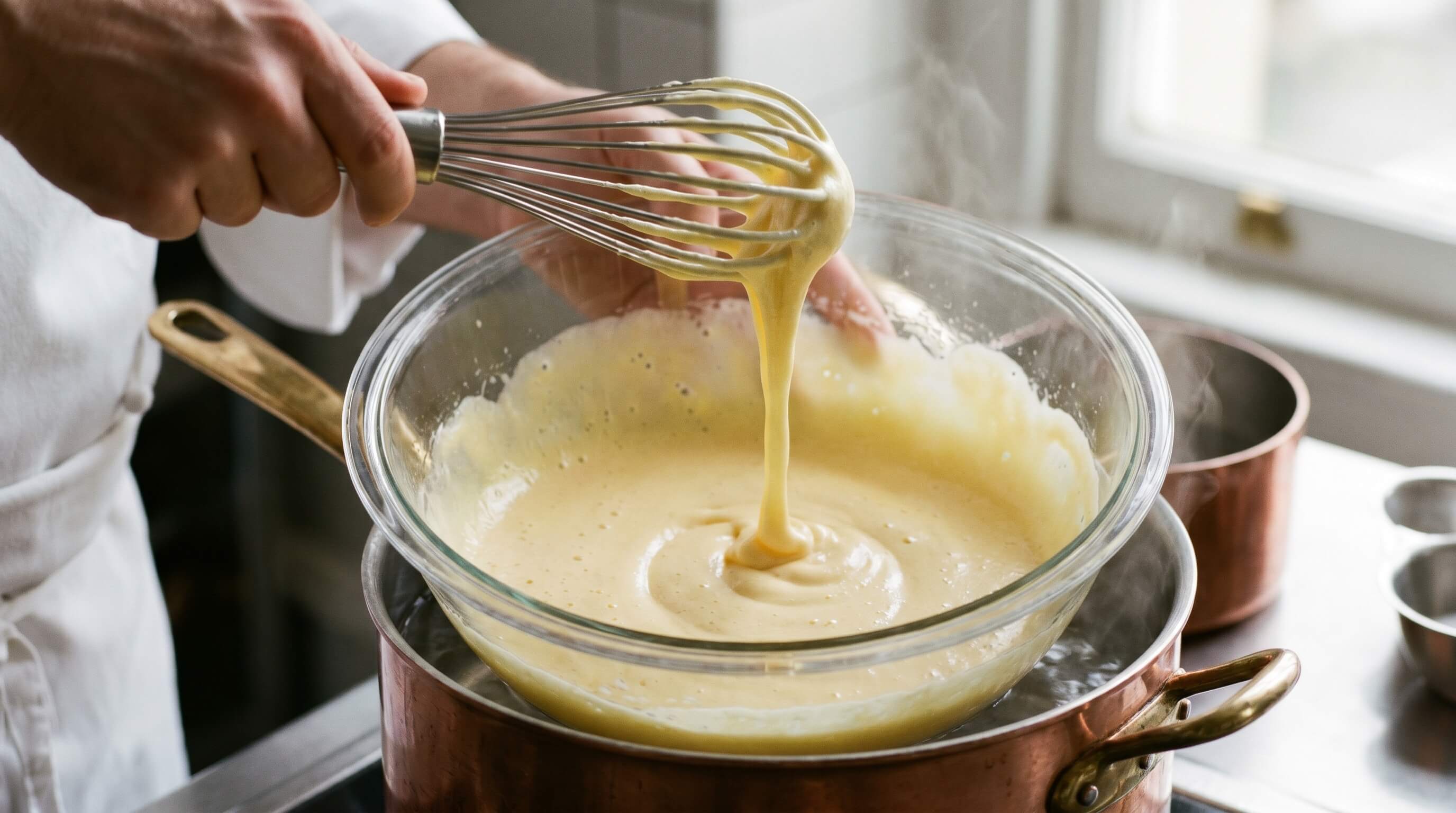
Fill a medium saucepan with about 5cm of water and bring it to a bare simmer over medium-low heat. Select a large heatproof bowl - stainless steel or glass - that can sit over the rim of the pan without its base making contact with the water. The gap matters: you want steam heat, not direct contact.
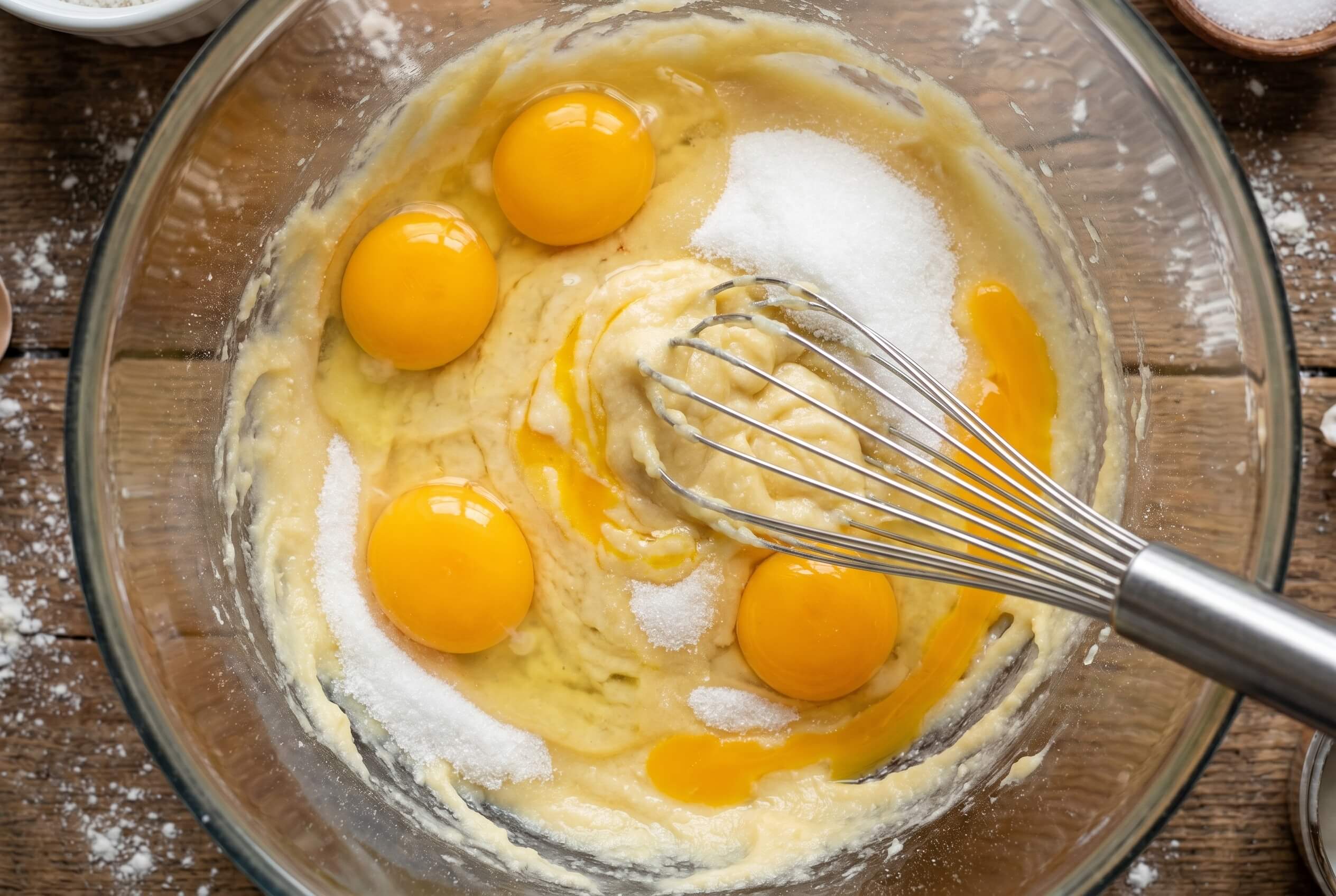
Place the egg yolks and sugar into the bowl while still off the heat. Whisk vigorously for 2 full minutes until the mixture turns pale yellow, increases slightly in volume, and falls from the whisk in slow, continuous streams. This initial off-heat whisking dissolves the sugar and begins building the foam structure before heat is introduced.
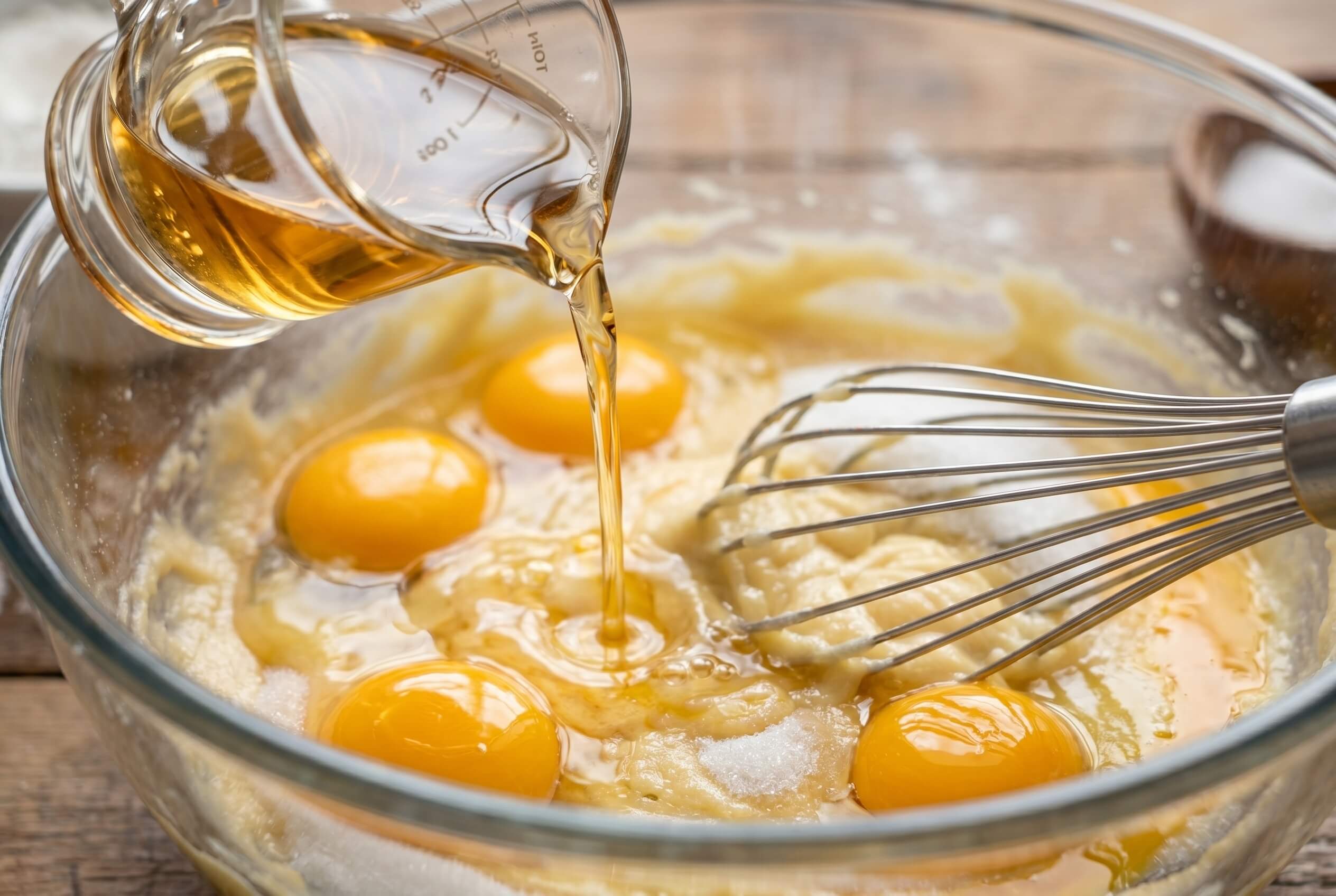
Pour in the Marsala and add the pinch of salt. Whisk briefly just to combine - around 20 seconds. The mixture will loosen considerably at this stage.
Set the bowl over the simmering water. Begin whisking immediately in wide, continuous circular strokes, moving from the edges of the bowl inward. Change direction every 30 seconds to ensure the mixture heats evenly. Keep an eye on the water below - if it starts to boil aggressively, slide the pan slightly off the heat to calm it down. Vigorous boiling overheats the bowl too quickly.
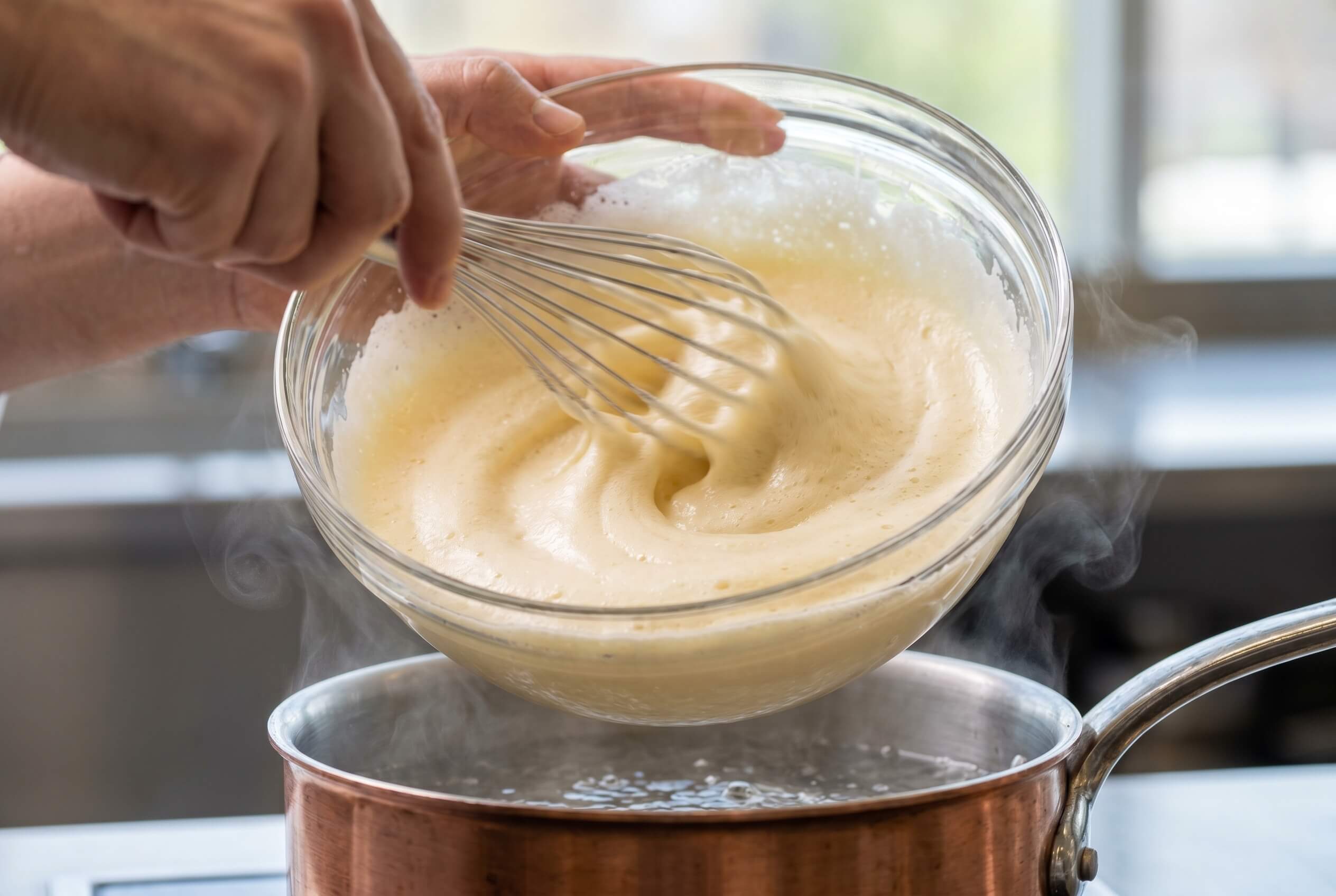
After 3 to 4 minutes, the mixture will visibly begin to expand and lighten. Continue whisking steadily. If you have an instant-read thermometer, monitor the temperature and keep it between 70°C and 70°C. Do not allow the mixture to exceed 70°C at any point - beyond this threshold, the yolks will begin to scramble rather than foam.
The sabayon is ready after 8 to 10 minutes of continuous whisking over heat. It should have tripled in volume, turned pale and airy, and reached the ribbon stage: when you lift the whisk and trail the mixture across the surface, the ribbon should hold for 3 to 4 seconds before slowly dissolving back in. If it disappears immediately, continue whisking. If it sits stiff and clumped on the surface, you have slightly overcooked it - remove from heat at once and whisk off-heat to cool it down.
Remove the bowl from the heat immediately. To serve warm, spoon directly over ripe berries, sliced peaches, or figs in individual glasses. To use as a sauce base or cool the sabayon down, set the bowl over a second bowl filled with ice and cold water, and whisk gently for 2 minutes until it reaches room temperature. Use within 45 minutes for best volume and texture.
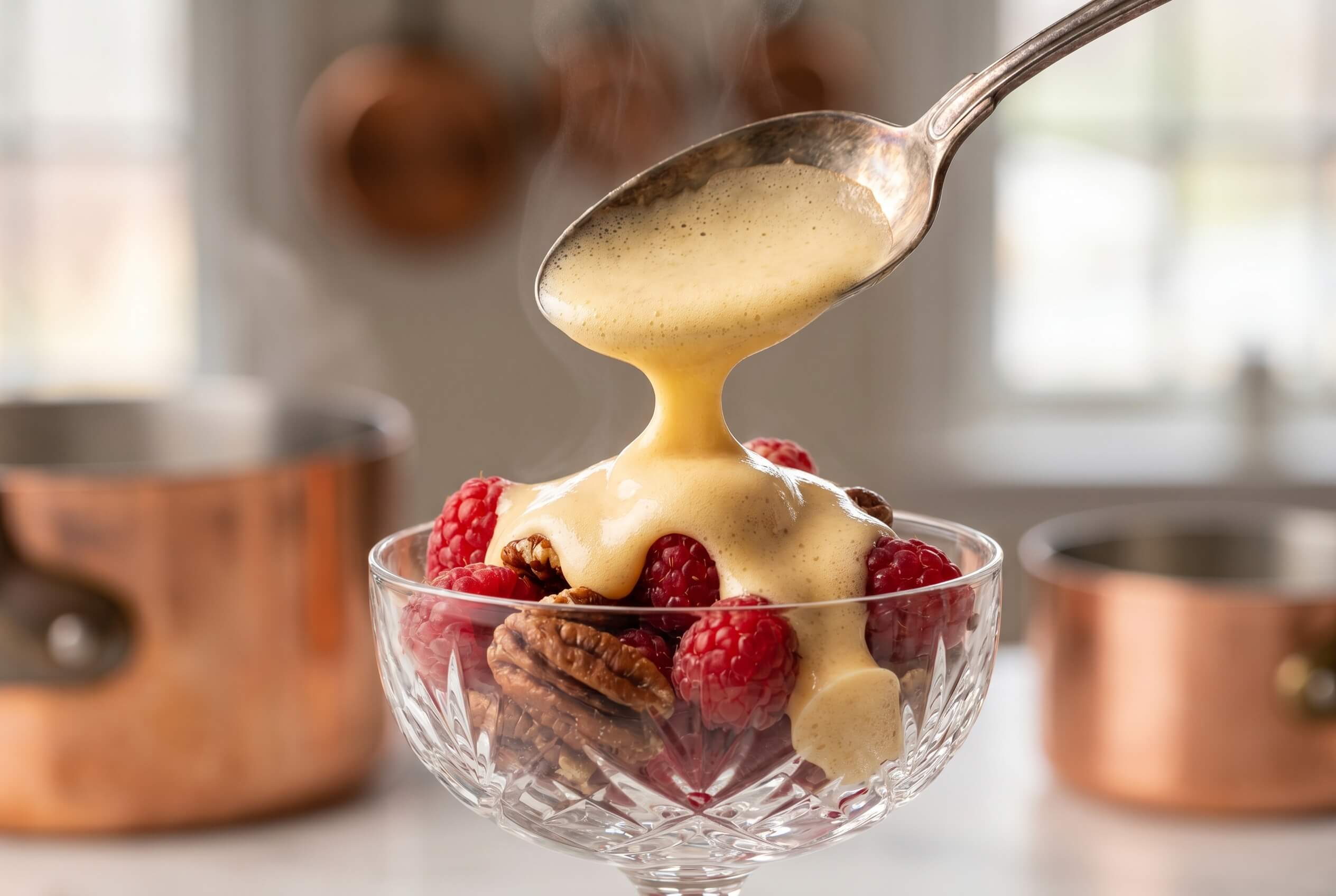
The sabayon is one of those preparations that looks like alchemy and behaves like physics. Four egg yolks, some sugar, and a splash of wine - whisked continuously over barely simmering water until they triple in volume and settle into the texture of warm, aerated silk. It is a sauce and a dessert simultaneously, and it rewards precision in a way that most custards simply do not.
The Italian version - zabaglione, traditionally made with Marsala - appears in cookbooks as early as the late 16th century, though its exact origins are disputed. By the time it crossed the Alps into French kitchens, it had become sabayon: a lighter, more versatile preparation used as a sauce poured over stone fruit, a base for stabilized mousses, or simply eaten from a chilled glass with a thin biscuit balanced on the rim.
What Happens Inside the Bowl
The mechanics of sabayon are governed by two simultaneous processes. First, the sugar dissolves into the yolks, drawing out moisture and forming a syrupy matrix. Then, as heat is introduced - slowly, indirectly, through a bain-marie - the proteins in the yolk begin to partially denature and set around the air bubbles that your whisk has introduced.
The critical window is narrow. Below 60°C, the proteins will not set enough to stabilize the foam, and the sabayon will collapse within minutes of leaving the heat. Above 70°C, the yolks scramble - the proteins coagulate too firmly, the foam breaks, and you are left with sweet eggy curds floating in wine. The target zone is 70°C to 80°C, sustained over the full whisking period.
This is why the bain-marie is non-negotiable. Direct heat is too aggressive and too uneven; even a low gas flame creates hot spots that push localized pockets of yolk past the coagulation threshold before the rest of the mixture has had time to catch up. Steam heat, conducted through the bowl from the water below, is diffuse and controllable - exactly what this preparation demands.
The Ribbon Stage
When the sabayon is ready, it will have roughly tripled in volume and reached what pastry cooks call the ribbon stage. Lift the whisk and let the mixture fall back into the bowl - it should hold its shape briefly on the surface before slowly folding back in, like a pale yellow ribbon sinking into itself. At this point, the structure is as set as it will ever get, and time is against you.
Sabayon is best served immediately, either still warm or cooled briefly over an ice bath. It will not hold its volume indefinitely. Within an hour, the foam begins to weep liquid at the base as air slowly escapes the protein matrix. This is not a failure - it is simply the physics of the thing - but it does mean sabayon is fundamentally a last-minute preparation, assembled to order and brought to the table still warm.
Choosing Your Wine
The traditional choice is dry Marsala - its oxidized, slightly nutty character pairs cleanly with the richness of the yolks without overwhelming the delicacy of the foam. But the technique accepts almost any wine: Prosecco produces a lighter, more floral result; a dry Riesling emphasizes acidity; a small pour of Sauternes turns the sabayon into something almost indulgent.
What you want to avoid is anything heavily tannic or aggressively oaked. Red wines and heavily wooded whites produce a sabayon with an astringent finish that works against the sweetness of the sugar. Stick to whites, sparkling wines, or light fortified wines, and use enough liquid for the alcohol to partially cook off during the process - roughly 30ml per yolk is a reliable starting ratio.